
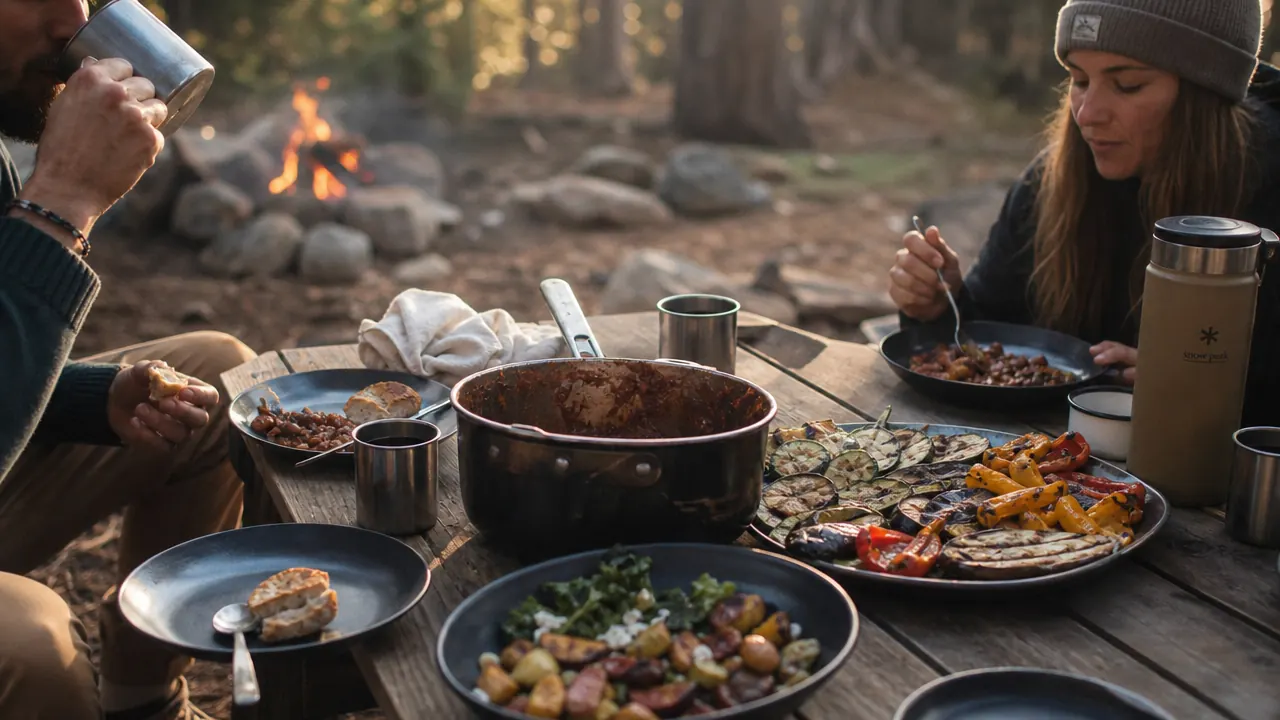
For the first three years my wife Jenna and I camped together, we packed sandwiches. Not because we do not like cooking. We like cooking. We packed sandwiches because the single-burner backpacking stove I had borrowed from my brother took 14 minutes to boil a quart of water and the wind at any exposed campsite turned it into a 22-minute ordeal. By the time coffee was ready and oatmeal was lukewarm, neither of us wanted to be standing at the picnic table anymore.
This was 2019. A buddy of mine, Owen, had been camping for 20 years and he would not shut up about his Camp Chef. I ignored him for a full season because the thing weighs over 12 lbs and I had convinced myself that lighter was always better. Then Owen made breakfast for six people at a group campsite in the Uintas at 8,400 feet and I stood there watching him run scrambled eggs on one burner and pancakes on the other while the water for coffee was already done. I went home and ordered the Camp Chef EX60LW Explorer that week.

The stove arrived in a box that was bigger and heavier than I expected. Two steel grates, a pair of 30,000 BTU burners, four adjustable legs that fold out to level the thing on uneven ground. The legs matter more than I thought they would. Every campsite we go to, whether it is Goblin Valley, Jordanelle, or the dispersed sites off Forest Road 058 north of Duchesne, has a table that is not quite level. Before the Camp Chef, I was shimming a single-burner with a folded paper towel. Now I just crank the legs.
Owen made breakfast for six at 8,400 feet while I was still waiting on oatmeal. I ordered the Camp Chef that week.
The first real test was a long weekend in October near Moab. Temperatures were in the low 30s at night and barely 45 by 8 a.m. We had four adults. I made coffee in a 32-oz percolator on the left burner while Jenna ran a cast iron skillet on the right. Bacon, then eggs, then toast on the flat steel grate we had picked up to use as a griddle. The whole breakfast for four was on the table in about 22 minutes. At 45 degrees. In wind that had everything else on the table flapping.
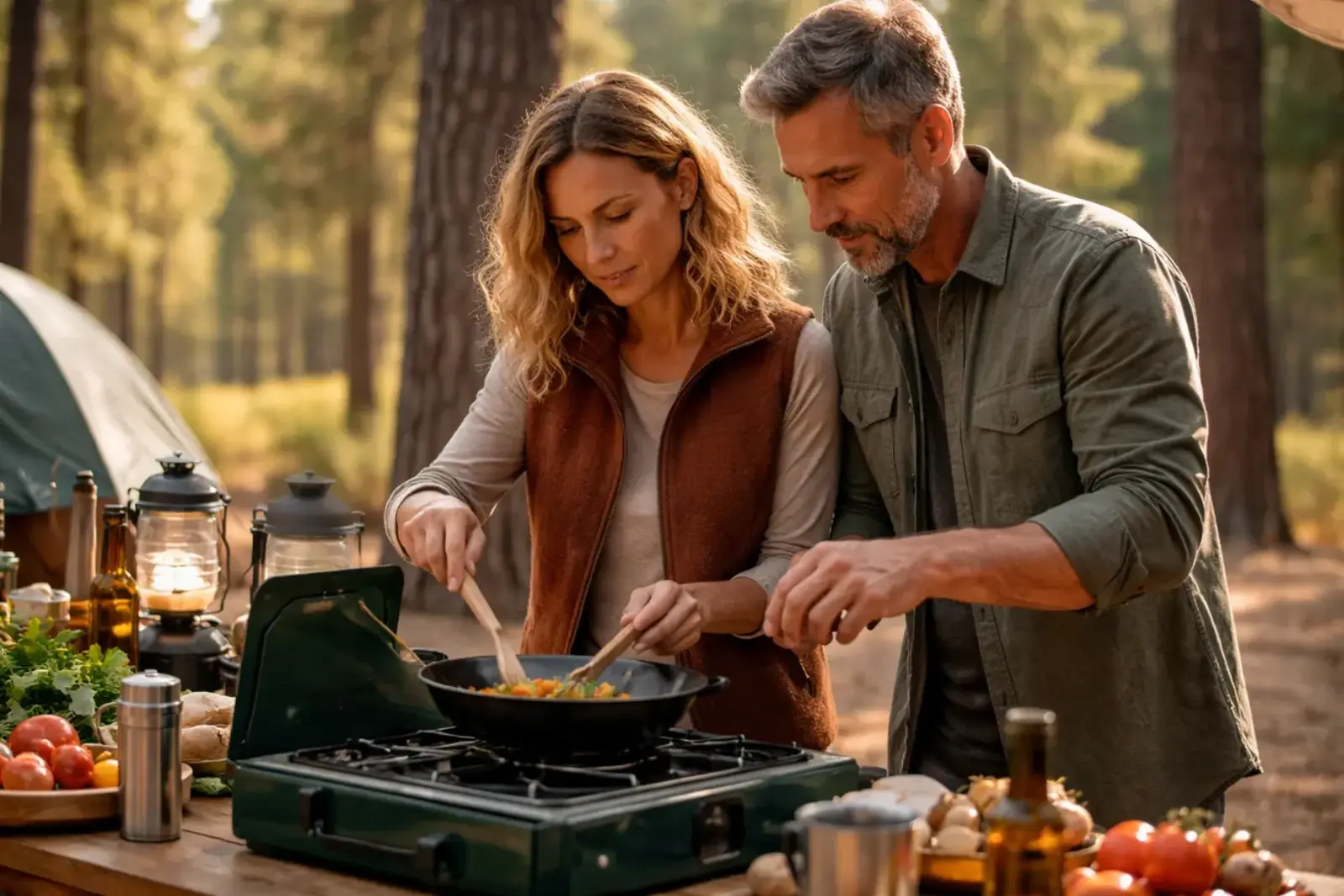
The windscreen panels on the Explorer are not fancy. They are just folded metal that clips to the sides. But they are positioned low enough to shield the burner heads where it matters, and the burner valves have enough range to go from a hard rolling boil down to a lazy simmer without snuffing the flame. I have held a steady simmer under a pot of chili for 40 minutes on this stove. That was never something I could do on a single canister burner, where the valve range was about three settings: off, medium, and scorched.
The two-burner that runs a real camp kitchen without the fuss
Camp Chef Explorer, 4.7 stars, 9,450+ verified reviews. 30,000 BTU per burner, adjustable legs, matchless ignition, and compatible with every Camp Chef accessory including the full-size griddle and pizza oven.
Amazon Check Today's Price on Amazon →I want to be honest about the tradeoffs because Owen was honest with me. The Explorer is not a light kit. It goes in the truck, not on your back. If you are doing any hike-in camping, even a quarter mile, you want something else. The legs are steel and the body is steel and the whole thing goes about 12.5 lbs without the propane hose. We put it in a canvas bag with the grates and it fills a specific corner of the truck bed that we now plan around. That is the deal you make.
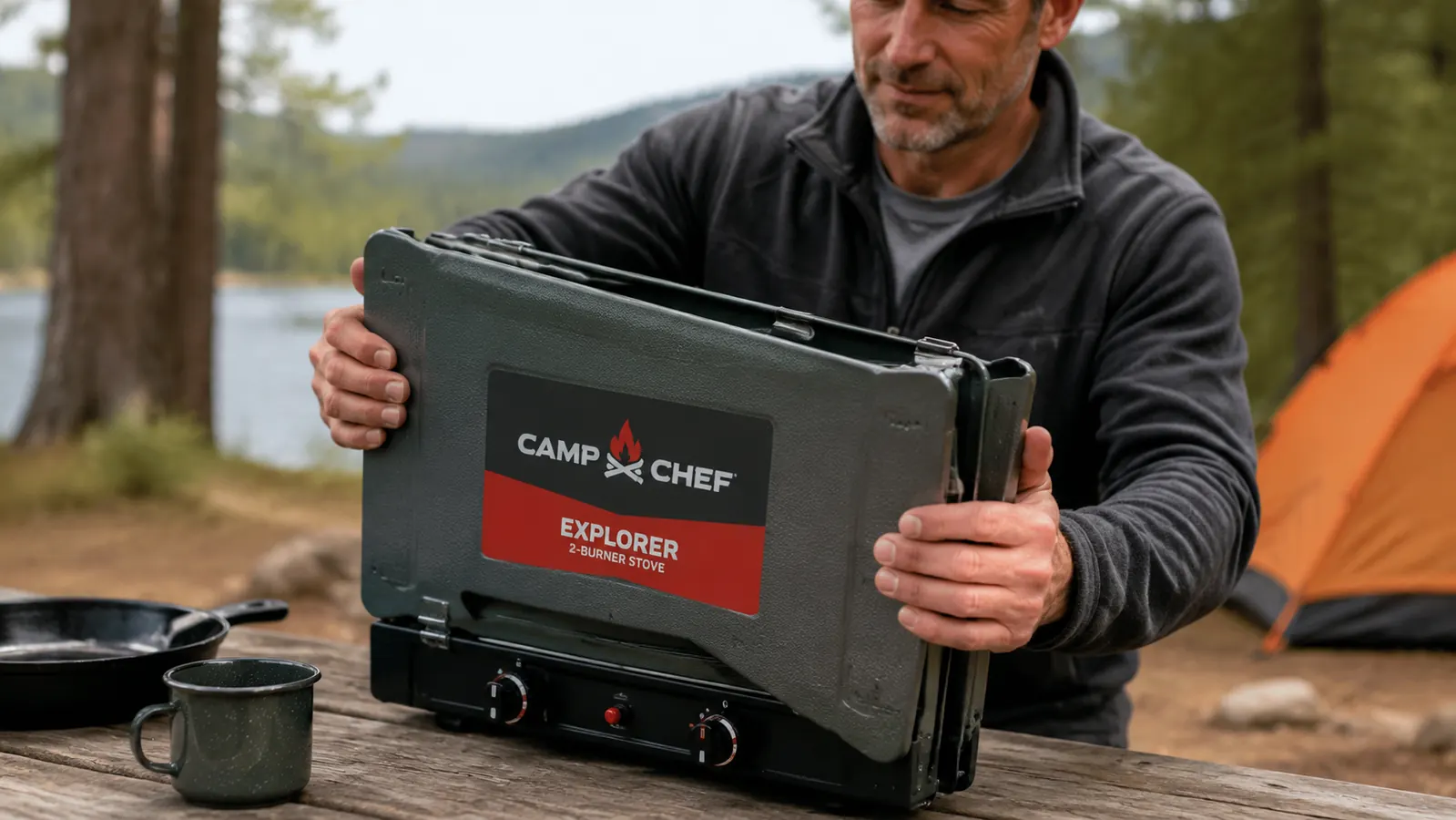
The other thing worth saying: the push-button igniter is reliable through about two seasons of regular use and then it gets finicky. Ours started missing on the left burner after about 18 months. A long-reach lighter solves it instantly, and we now keep one clipped to the bag, but it is the one design detail I would change if I were Camp Chef. Some people have better luck than others with how long the igniter holds up. If you read the full Camp Chef Explorer review, you will see I am not alone in that note.
We have now done four summers and three falls with this stove. I have cooked pasta, seared trout we caught that afternoon, made a Dutch oven cobbler (the stove can run a 12-inch Dutch oven without the lid rattling), and fried enough bacon to embarrass myself. The grates still clean up with a wire brush and a damp cloth. The legs still adjust smoothly. The burners light every time with the backup lighter. Nothing has bent or seized or worn through.
What I Would Tell You If We Were Sitting at My Kitchen Table
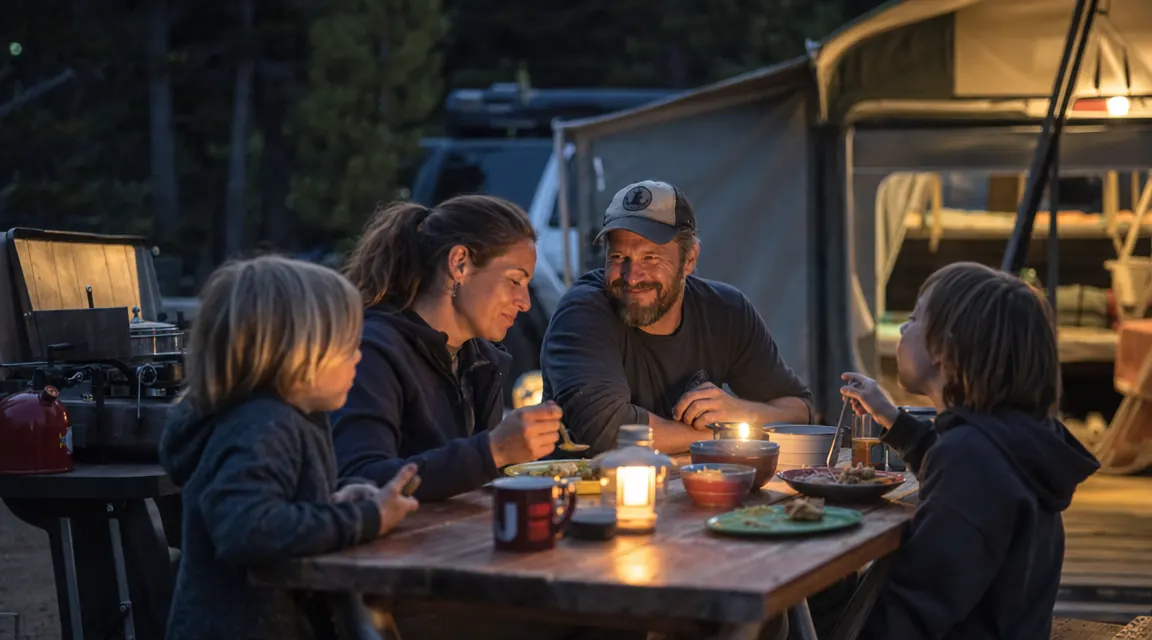
If you are doing car camping with more than two people and you do not have a two-burner stove yet, stop waiting. The difference between a single canister burner and a real two-burner is not incremental. It is the difference between camp cooking as a chore and camp cooking as the thing you actually look forward to. I have a friend who swears by a smaller, cheaper two-burner from a big-box hardware chain. It works, I have cooked on it. But the Camp Chef has noticeably more stable flame control, the legs are not optional on uneven sites, and the BTU output means altitude does not slow it down the way it does on lower-output stoves. If you want to see how it stacks up against the alternatives, the two-burner vs single-burner breakdown is worth reading before you decide.
The price lands around $128 right now, which is mid-range for this category. You can spend $80 and get something that works fine for weekend trips. You can spend $250 and get a griddle-first outdoor range with a full wind enclosure. The Camp Chef Explorer sits in the part of that range where the build quality justifies the price without making you feel like you bought a restaurant range for car camping. It is the one I would tell you to get if you asked me at the next campsite.
Ready to stop eating sandwiches because the stove could not keep up?
The Camp Chef Explorer has 9,450+ reviews and a 4.7-star rating. Ships from Amazon with free returns. Check current pricing and stock before your next trip.
Amazon Check Today's Price on Amazon →